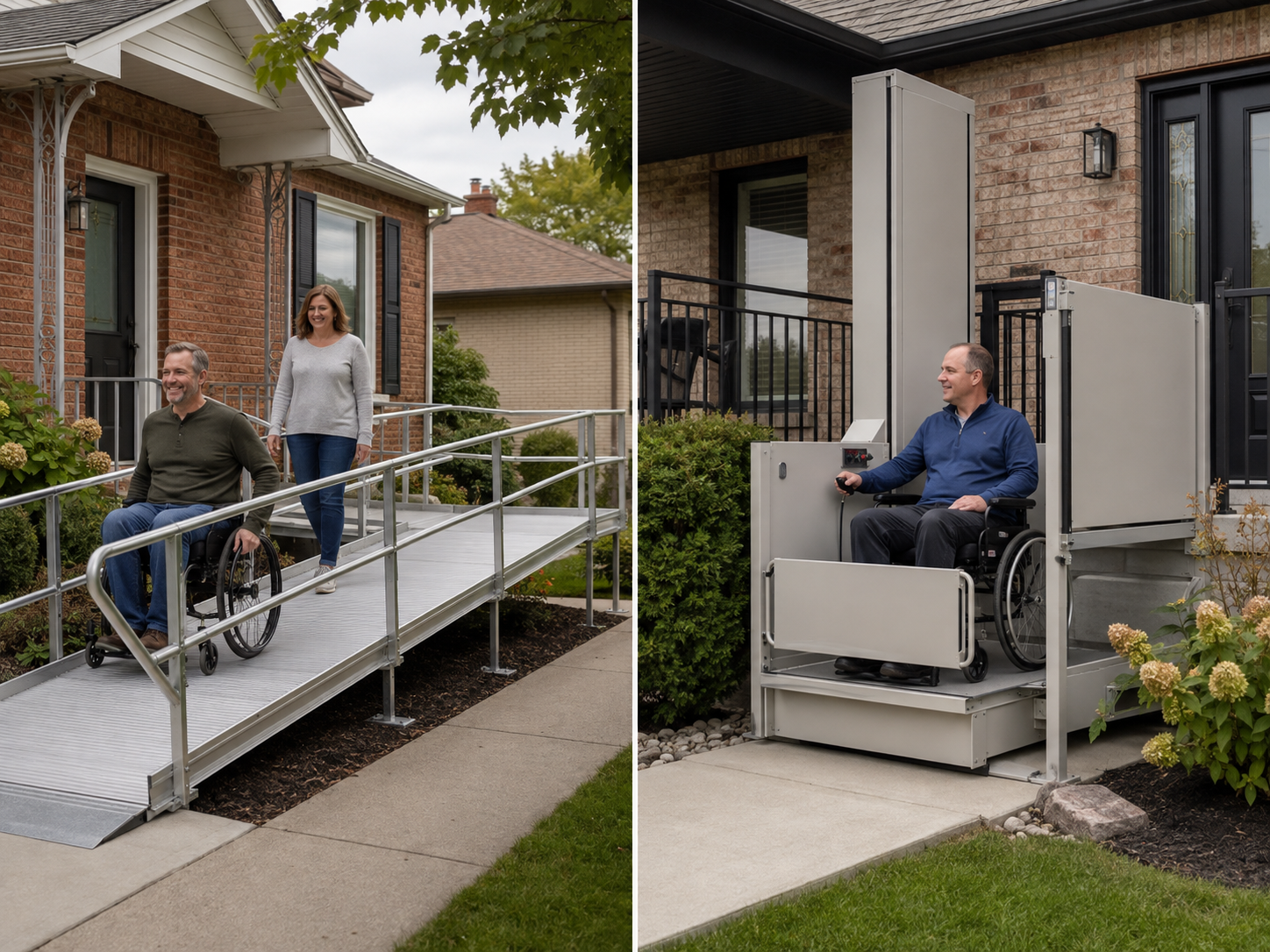
A step that seems minor can become a significant barrier when someone uses a wheelchair, mobility scooter or walker. The right wheelchair ramps for home can make entering and leaving safer, easier and more independent—but not every ramp is designed for the same entrance or mobility device.
Portable, threshold and modular ramps each address different accessibility needs. Before choosing among them, it is important to consider the vertical rise, available space, doorway, mobility equipment and intended length of use.
What Is a Threshold Ramp?
A threshold ramp is designed to bridge a relatively small change in height, such as a raised doorway threshold, sliding-door track or short lip between two surfaces. These compact ramps are commonly made from rubber, aluminum or another durable material. Some sit directly against the threshold, while others can be adjusted to accommodate a particular height.
A threshold ramp may be appropriate when:
- The elevation change is small
- The entrance already has a mostly level approach
- A doorway lip interferes with wheelchair or walker access
- A low-profile solution is needed indoors or outside
- The ramp can rest securely without shifting
Even a small threshold ramp must be matched carefully to the entrance. The ramp should provide a stable transition without interfering with the door, creating a tripping hazard or producing an approach that is too steep for the user.
When Does a Portable Wheelchair Ramp Make Sense?
Portable wheelchair ramps are intended to be moved, folded or stored when they are not required. Depending on the design, they may help users navigate one or more steps, enter certain buildings or create temporary access when visiting family and friends.
Common styles include folding suitcase ramps, single-fold ramps and multi-fold designs. Their portability can make them useful when access is needed in more than one location.
Before selecting a portable ramp, consider:
- The total vertical rise that must be crossed
- The ramp’s usable width and weight capacity
- Whether it supports a wheelchair, scooter or walker
- The combined weight of the user and mobility equipment
- The stability of the upper and lower contact points
- Whether someone can safely lift, position and store it
- The manufacturer’s recommended rise and application
Portable does not automatically mean appropriate for every staircase or entrance. Accessibility Standards Canada notes that portable ramps can introduce safety concerns, including the absence of handrails, which should be carefully evaluated before use.
What Is a Modular Wheelchair Ramp?
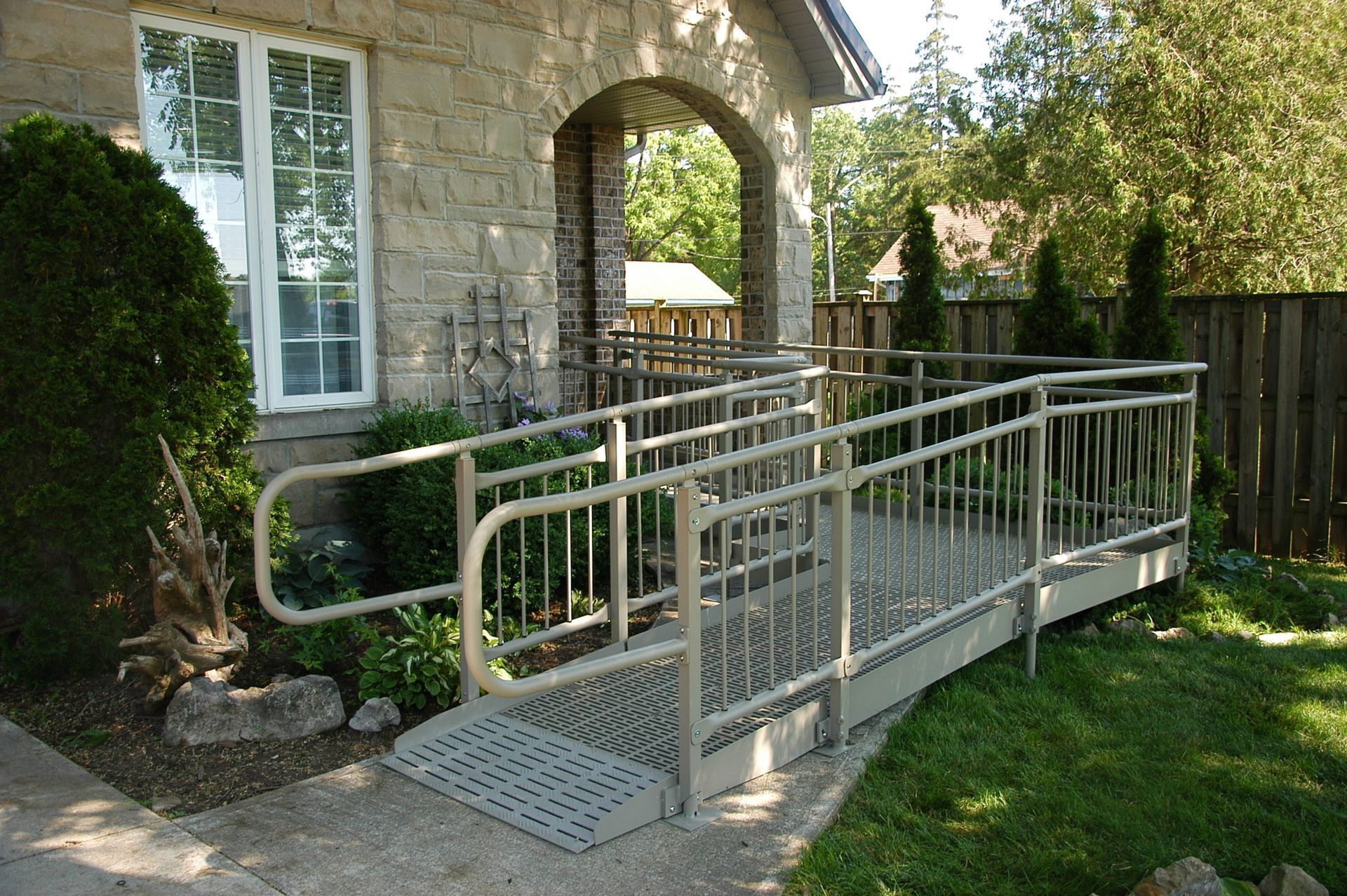
A modular ramp is assembled from connected ramp sections, landings, handrails and supports. Its layout can often be configured around the available property space using straight sections, turns or switchbacks.
These systems are commonly considered for entrances with a greater vertical rise or where dependable, longer-term access is required. Because the components can be configured to the property, a modular system may provide more flexibility than a single portable ramp.
A modular ramp is typically worth exploring when the entrance has multiple steps, handrails or edge protection are important and especially if the property requires a custom layout. Modular systems require careful planning. The route must account for doors, walkways, driveways, drainage, turning space and the safe movement of everyone using the entrance.
Measuring More Than the Number of Steps
Ramp selection should begin with the vertical rise from the lower surface to the upper landing, not simply the number of steps. The available horizontal space must then be considered alongside the slope appropriate for the user, mobility equipment and intended application.
Ontario accessibility standards establish technical ramp requirements in regulated settings, including considerations such as width, slope, landings, surfaces and handrails. However, the rules applicable to a private residence and a particular project can vary. Homeowners should confirm current building-permit, zoning and construction requirements before installing or altering a ramp. The City of Windsor’s Building Department can provide project-specific permit information.
Consider the Mobility Device and the Person Using It
A ramp that works for a manual wheelchair may not automatically suit a power wheelchair or mobility scooter. Wheelbase, ground clearance, turning radius, total weight and braking or propulsion ability can all affect compatibility. The individual’s strength, balance and ability to control the equipment on an incline also matter. A slope that one user can navigate independently may be unsuitable for another person using a similar chair.
Caregivers should be included in the assessment when they will regularly assist on the ramp. The goal is to create an entrance that works for the complete routine and provides the utmost value to users.
Plan for Windsor-Essex Weather
Exterior wheelchair ramps in Windsor must contend with rain, freezing temperatures, snow and ice. A surface that feels secure in dry weather may become difficult to use when wet or frozen.
Drainage, traction and regular maintenance should be considered from the beginning. Leaves, debris, standing water and snow can reduce usable width or create slippery areas. Exterior ramps should be inspected routinely for movement, loose components, corrosion and surface wear.
Choosing the Right Ramp for Your Home
Threshold ramps are generally intended for small elevation changes. Portable ramps offer flexibility for suitable temporary or occasional applications. Modular systems can provide a more structured solution for entrances requiring greater rise, longer runs or daily use.
However, the choice can be confusing when made on your own. That's why Universal Health Products helps individuals, families and caregivers throughout Windsor and Essex County, along with Chatham-Kent, to explore mobility and home-accessibility equipment suited to their circumstances.
Visit our showroom at 635 Tecumseh Rd W in Windsor or call (519) 258-6717 to discuss wheelchair-ramp options for your home.