A manual wheelchair may suit your seating and everyday routines, while some journeys require more pushing than you comfortably manage. Wheelchair power assist adds powered assistance to a compatible manual chair, offering another option to discuss before changing your mobility setup.
The starting question is whether the device works with your particular chair, your abilities and the places you want to go. In your daily life planning appointments, shopping or family visits, compatibility, controls and transport handling deserve as much attention as the motor.
Understand the Different Power-Assist Designs
Power assist describes several types of equipment:
- Front-mounted devices attach ahead of the wheelchair and typically use a powered wheel and steering controls.
- Rear-mounted devices provide assistance from behind the chair, with model-specific activation and control methods.
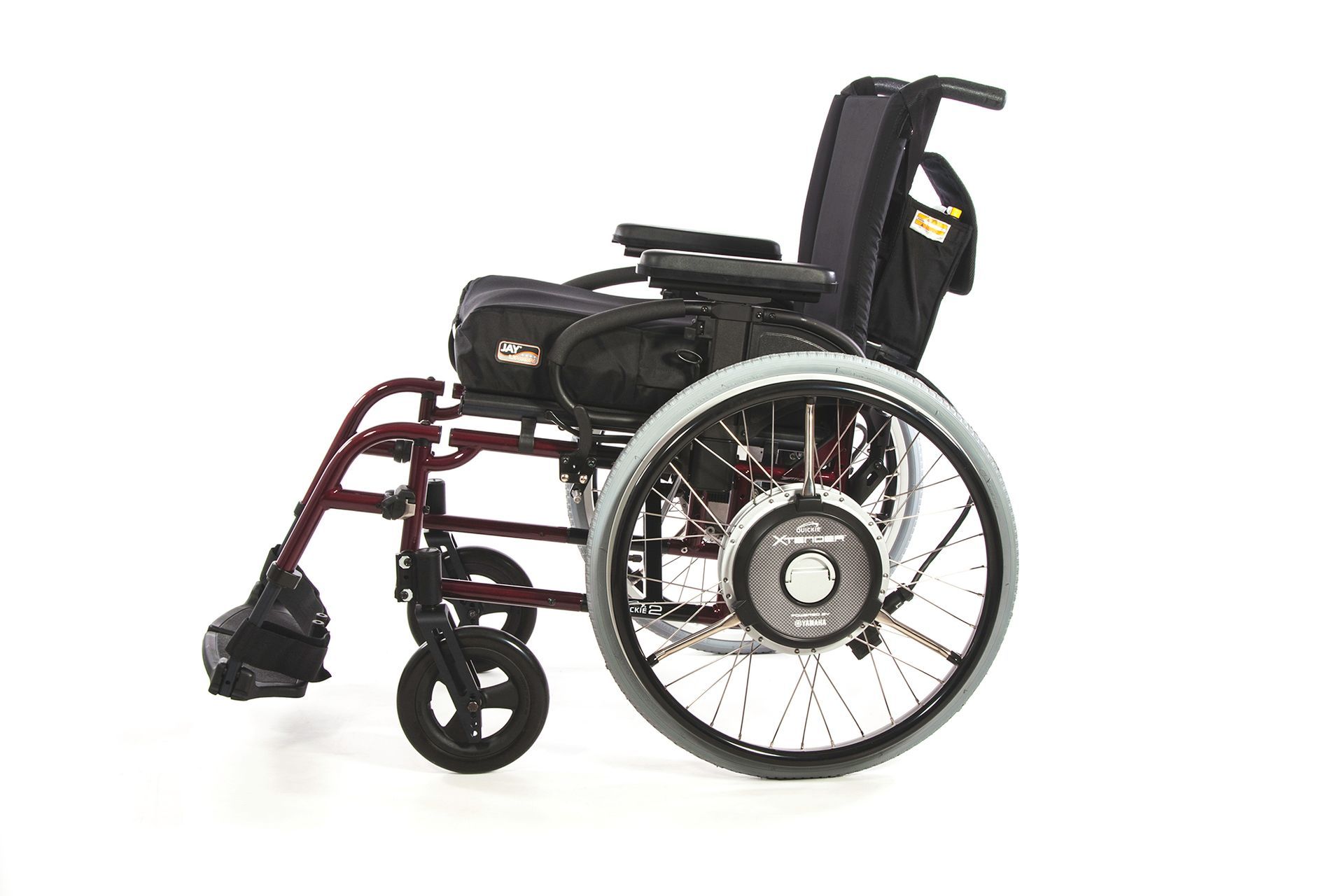
- Wheel-based systems incorporate motors into replacement rear wheels; some respond to input at the hand rims.
These designs change handling in different ways. The person may still need to steer, brake or provide propulsion input, depending on the system.
UHP lists Mototronik power assist as a front-mounted example. Its powered front-wheel arrangement lifts the wheelchair’s front casters when connected for use, changing the chair’s footprint and steering.
Confirm Compatibility With Your Exact Wheelchair
A device described as suitable for many manual wheelchairs still needs checking against the individual configuration. Start with the chair’s manufacturer, model, frame design and existing accessories.
Ask the provider to confirm:
- Approved attachment: Which clamps, brackets or connectors are required for this chair?
- Frame clearance: Will mounting hardware interfere with foot supports, folding components or transfers?
- Load limits: Does the complete configuration meet the relevant manufacturer limits?
- Seating: Will the user’s cushion, back support and seated position remain appropriate?
- Installation: Who will fit, adjust and check the system?
Review the specific compatibility documentation rather than relying on photographs or a general product description. When comparing manual wheelchair options, discuss the proposed power-assist attachment before selecting a frame.
Check Controls, Steering and Braking Together
Powered assistance should be assessed alongside the person’s ability to direct and stop the chair. Consider hand function, reach, coordination, posture and how comfortably the controls can be operated.
Ask for a demonstration of starting, changing speed, turning, stopping and disengaging assistance. Clarify which actions use the device’s controls and which still depend on the wheelchair user. Braking arrangements differ between designs; powered movement does not establish how a particular system slows on a slope.
Include training and suitable initial settings in the equipment discussion. A controlled trial should reflect the intended user’s needs, with appropriate professional guidance.
Consider the Complete Route
An attachment can change the space needed to approach a doorway, turn a corner or park beside a table. Check overall dimensions with the device attached, rather than using the manual chair’s measurements alone.
For community outings, discuss surfaces, gradients, driveway transitions and pedestrian areas. Confirm the manufacturer’s operating limits and consider where the device will be removed or stored.
In Southern Ontario, wet leaves and changing weather also affect route planning. Power assist should not be treated as a solution for snow, ice or every uneven surface.
Plan Attachment, Battery Handling and Vehicle Transport
Convenient powered travel still involves preparation. Ask who will connect and remove the device, where those tasks will happen and whether assistance is needed.
Check the weight and shape of each component that must be handled. Confirm approved lifting points, storage dimensions and how the equipment will be secured during transport. A detachable device is not necessarily easy for every person to lift.
Review battery removal, charging, storage and the approved charger. Ask what happens if assistance becomes unavailable during an outing, including how the chair can be moved and what help may be required. Follow the instructions for the exact system.
Compare Power Assist With a Complete Power Wheelchair
A power-assist device adds propulsion assistance to a manual wheelchair; it does not automatically provide the seating functions or control options of a complete power wheelchair.
Consider both pathways around seating requirements, propulsion, control access, transport and the support available. Our manual and power wheelchair comparison introduces the broader equipment differences. An occupational therapist or another appropriate healthcare professional can help assess how the proposed setup fits the person’s needs.
Discuss Your Power-Assist Questions With UHP
Bring your wheelchair’s model details, relevant measurements and a description of your usual journeys. Include the intended user and anyone who will help with attachment, loading or charging.
Contact Universal Health Products to discuss power-assist options and compatibility questions.