Choosing between a shower chair and a transfer bench starts with two questions: where will you sit to wash, and how will you enter the bathing space?
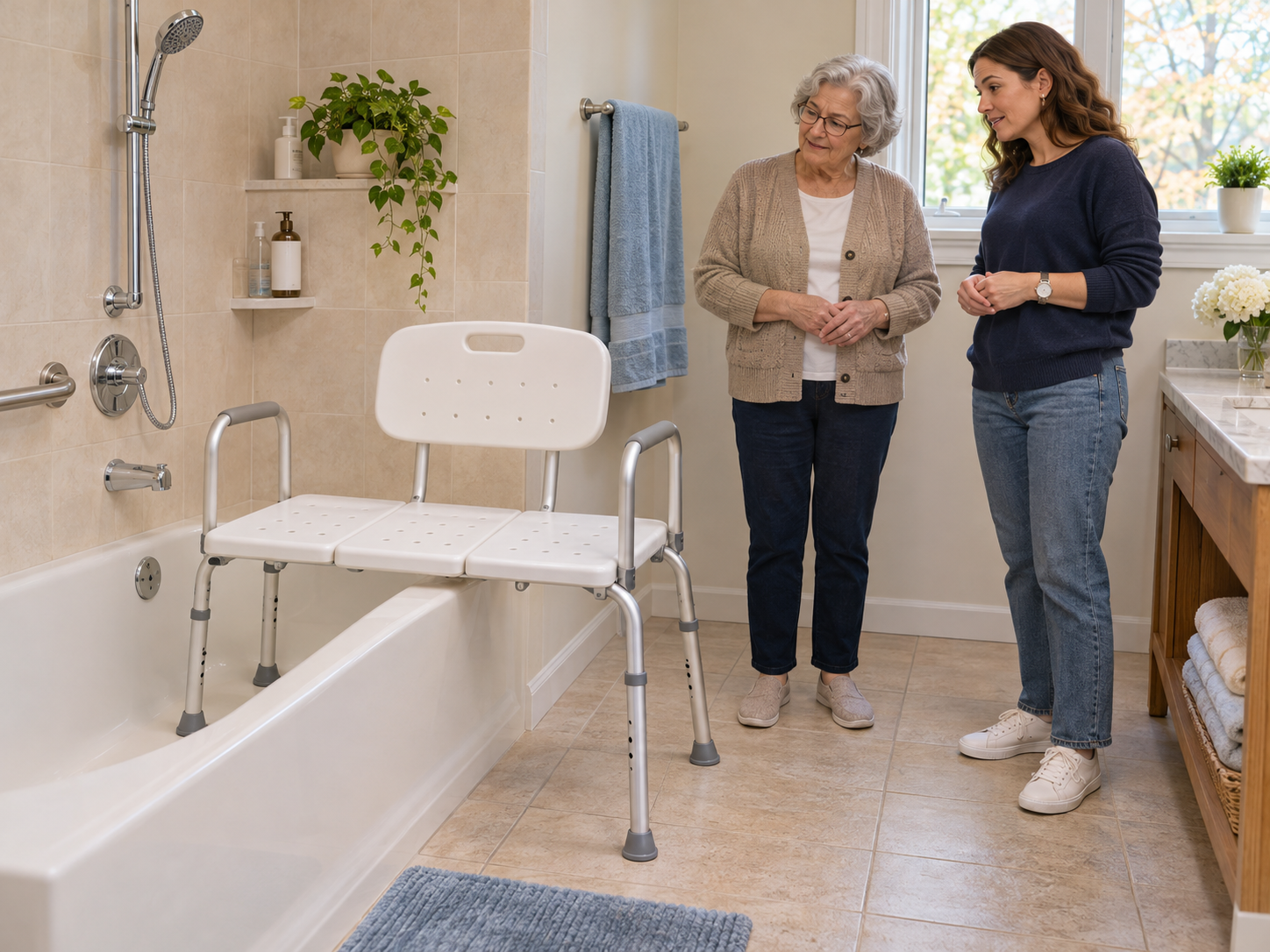
A shower chair sits inside a shower or bathtub. A transfer bench extends across the tub wall, providing seating both outside and inside the tub. Both offer seated bathing, but they address different parts of the routine.
For Windsor-Essex households, the right starting point is your bathroom layout, the movements you find difficult and any help you normally receive.
Shower Chair vs Transfer Bench: The Main Differences
| Consideration | Shower chair | Transfer bench |
|---|---|---|
| Position | Inside the shower or bathtub | Spans the bathtub wall |
| Main role | Seating once inside the bathing space | Seating for entry across the tub edge and bathing |
| Entry planning | The shower threshold or tub wall still needs to be managed | A seated entry approach may be possible, depending on individual abilities |
| Space | Entire leg footprint must fit the bathing floor | Requires suitable space inside and outside the tub |
| Features to compare | Seat size, height range, arms and backrest | Seat size, height range, transfer-side access and backrest |
These distinctions describe common designs; the exact configuration depends on the model.
Product names can overlap, so check the actual design rather than relying on “bath bench” in a listing. Explore UHP’s shower seating and bathroom aids, then confirm product details and current availability with the team.
Start With the Tub or Shower Layout
A seat that fits on paper may still interfere with a door, tap or sloping tub floor. Compare the equipment’s overall footprint with the usable space at floor level, including curved tub walls and built-in ledges.
For a transfer bench, check the tub wall’s height and width, the position of door tracks and the available landing space outside. Sliding doors can interfere with bench placement or access. Ask about compatibility before choosing equipment or arranging changes to the enclosure.
Consider the shower curtain too. A bench can interrupt its usual position, so discuss how the selected design manages water containment. Make sure controls, toiletries and a handheld shower, where used, remain within comfortable reach.
Compare the Seat and Supports
Look beyond whether the chair or bench fits the room:
- Seat width and depth: Compare the usable sitting area, including space between arms.
- Height adjustment: Check that the adjustment range suits the person and the bathing layout.
- Arms: These may provide support, but fixed arms can obstruct some transfer approaches.
- Back support: Consider the person’s sitting needs and access for washing.
- Weight capacity: Check the exact model’s stated limit.
- Feet and adjustment locks: Follow the manufacturer’s setup requirements and inspect for wear or damage.
Drainage, cleaning access and the ability to reach personal-care items also affect everyday use. Adjustable legs help accommodate specified setups; they do not make every tub or shower compatible.
Leave Room for the Person and Any Assistance
Include the intended user in the discussion. Ask what feels difficult: standing to wash, stepping over the tub edge, lowering onto a seat or managing fatigue.
Someone approaching with a walker may need a different arrangement from someone transferring from a wheelchair. If a caregiver assists, consider where they can stand and reach without crowding the equipment.
An occupational therapist can help assess transfer needs and the bathroom setup. Neither product guarantees an independent transfer. For grab bars, toilet supports and other room-wide considerations, see our bathroom safety products.
Your Before-You-Shop Measurement Checklist
Bring photographs and record:
- Usable tub or shower floor width and depth.
- Tub wall or shower threshold height, plus tub rim width.
- Door opening, door swing and any tracks or fixed panels.
- Clear floor space outside the bathing area.
- Nearby toilet, vanity and other obstructions.
- Locations of taps, shower controls and existing grab bars.
Compare these measurements with the exact model’s seat dimensions, leg footprint, height range and installation requirements. Record measurements in consistent units.
If equipment is needed after surgery or a hospital stay, follow your discharge instructions about bathing and movement restrictions. Our home recovery equipment checklist connects bathroom planning with other preparations.
Talk Through Your Bathing Setup With UHP
Bring your measurements, photographs and any equipment recommendations to Universal Health Products. Contact UHP to discuss options for your routine.
A Common Question: Will Any Bench Fit My Tub?
No. Tub dimensions, door tracks, surrounding fixtures and individual transfer needs can rule out a particular model. Confirm compatibility before purchase.