Putting on socks, guiding a sleeve over your shoulder or slipping into shoes involves different movements. When reaching, bending or managing small fasteners becomes difficult, choosing a tool starts with identifying the part of dressing that needs support.
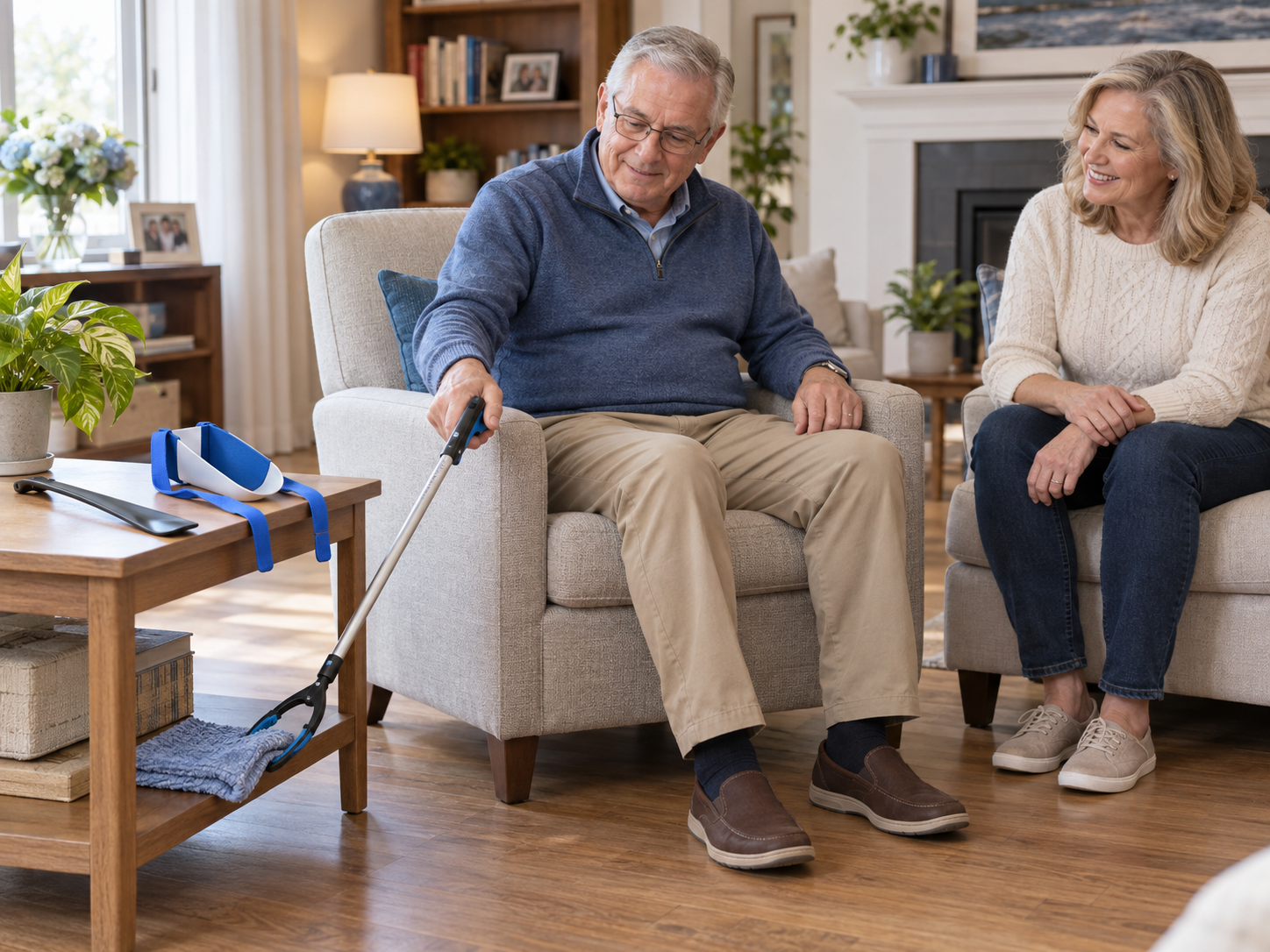
A sock aid helps with socks. A dressing stick helps position clothing. A long-handled shoehorn guides your heel into a shoe. Their usefulness depends on your grip, movement, clothing and preferred routine.
For Windsor and Essex County adults and families, these tools offer practical options to discuss. Our overview of daily living aids for home routines provides broader context; this guide focuses on getting dressed.
Match the Dressing Aid to the Task
Start with the movement you find difficult, rather than buying a collection of tools without knowing which you will use.
- Putting on ordinary socks: A sock aid holds the sock open while a cradle and pulling straps help guide it onto your foot.
- Positioning clothing: A dressing stick’s shaped ends can help guide garments on or off.
- Reaching clothing: A reacher uses gripping jaws to retrieve lightweight items or help position clothing.
- Managing fasteners: A button hook helps draw buttons through buttonholes; a zipper pull provides a different way to grasp a zipper.
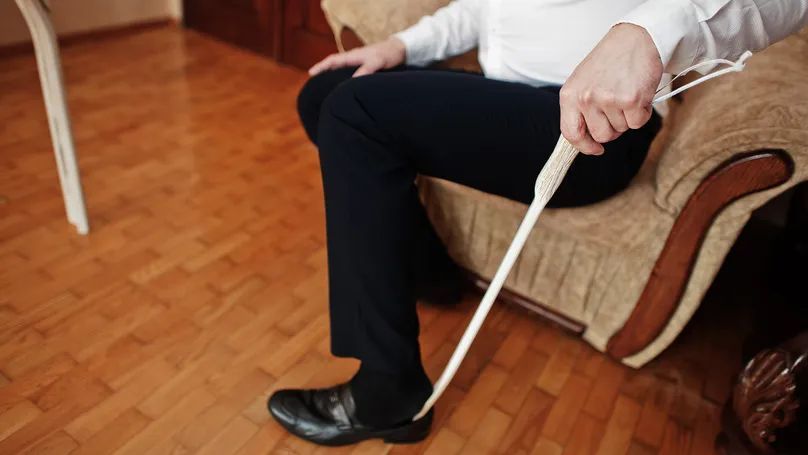
- Putting on shoes: A long-handled shoehorn helps guide your heel into the shoe with less reaching.
These tools serve different purposes. A shoehorn does not fasten shoelaces, and a dressing stick does not replace a sock aid’s cradle. Matching the tool to the task helps narrow your choices.
Choosing a Sock Aid: Look Beyond the Cradle
Sock aids come in flexible and rigid designs. Flexible versions bend while you load the sock; rigid versions hold their shape and may provide a wider opening. Neither design is automatically best for everyone. Handle style, coordination and the ability to load the sock also matter.
Ask to review the complete task:
- Can you stretch your usual sock over the cradle?
- Can you comfortably hold the handles or loops?
- Do the straps reach a useful position while you are seated?
- Can you guide your foot into the opening and pull without excessive effort?
- Will you need assistance loading the sock, even if you can manage the pulling?
Sock thickness and elasticity can affect the experience. Discuss the socks you normally wear instead of assuming every material will behave the same way. Ordinary sock aids and compression-stocking applicators are not interchangeable by default. If you wear prescribed compression hosiery, confirm the applicator’s intended use and ask your healthcare professional about suitable application methods.
Dressing Stick or Long-Handled Shoehorn?
A dressing stick is intended to help move clothing; a shoehorn guides the heel into footwear. Combination products bring these functions together, but the handle still needs to suit your reach and grip.
For a dressing stick, consider whether you can control its shaped ends without catching delicate fabric. For a shoehorn, compare length, handle comfort and whether you can position it from your usual seat. A longer tool is useful only if you can manage it comfortably.
UHP’s catalogue lists an Easy Pull Sock Aid, an EZ Dressing Stick/Shoehorn Combo, reachers and button-hook options. Explore the dressing and daily living aids category, then ask about current availability and product details.
Prepare Your Dressing Space
Think about where the tool will be used each morning. Choose a stable seat appropriate to your needs, keep clothing and aids within comfortable reach, and leave enough clear space to manage the task.
Try the equipment with your usual clothing and footwear. A demonstration can help you identify whether the difficulty is reaching, gripping, positioning or completing the final adjustment. Include a family member or caregiver if they will assist.
Cooler mornings in Southern Ontario often mean more layers, socks and enclosed shoes. Preparing those items together can help you assess the whole routine.
If You Are Preparing for Recovery
After surgery or a hospital stay, follow your own discharge instructions. A dressing aid does not override restrictions on bending, twisting or weight bearing. Ask your occupational therapist or care team which tools and techniques fit your recovery plan. Our home recovery equipment checklist connects dressing preparation with other everyday arrangements.
Start with the task you want to make more manageable. Contact Universal Health Products to discuss dressing-aid options and current availability.
Located in the Windsor-Essex area? Visit our showroom at 635 Tecumseh Rd W, Windsor, or call (519) 258-6717.