Buttons, shoes, a jar lid or an ordinary shower can become frustrating when reaching, gripping or standing takes more effort. Daily living aids offer practical ways to adapt these familiar tasks around the person doing them.
For Windsor-Essex families, the useful starting point is a specific question: which part of the daily routine has become difficult? Matching a tool to that task can help someone participate more comfortably, whether they are recovering from an injury, living with a disability or noticing changes in strength and mobility.

What Are Daily Living Aids?
Daily living aids are tools that assist with everyday activities such as dressing, bathing, preparing food and eating. Examples include long-handled shoehorns, sock aids, reachers, easy-grip utensils and bathing supports.
They range from small handheld tools to equipment that needs fitting or installation. The most useful choice depends on the task, the person's abilities and the space where it will be used. Health Canada's overview of assistive devices provides examples and advice on choosing and using them.
Dressing and Reaching: Reduce Unnecessary Effort
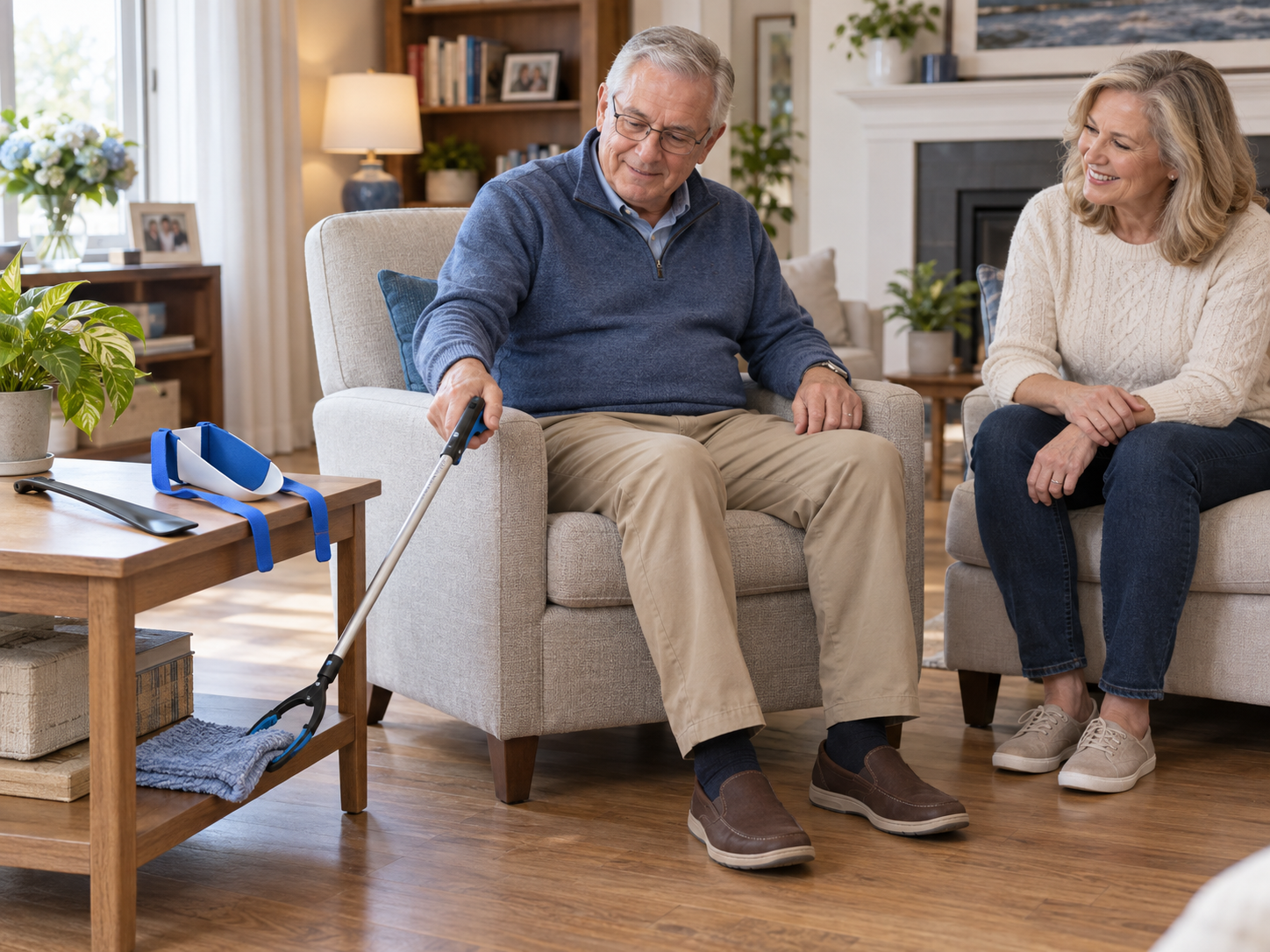
A long-handled shoehorn or sock aid may help when bending towards the feet is difficult. Button hooks and zipper pulls provide another way to manage small fastenings, while a dressing stick can help with selected clothing tasks.
A reacher can assist with retrieving light objects without bending as far. Its length, trigger action and gripping end should suit the user and the items they need to reach. Keep frequently used items within comfortable reach as well; changing their location may solve part of the problem before another tool is needed.
Trying the movement matters. A device that requires more squeezing, coordination or preparation than the person can comfortably manage may offer little practical benefit.
Bathroom Aids: Match the Support to the Space
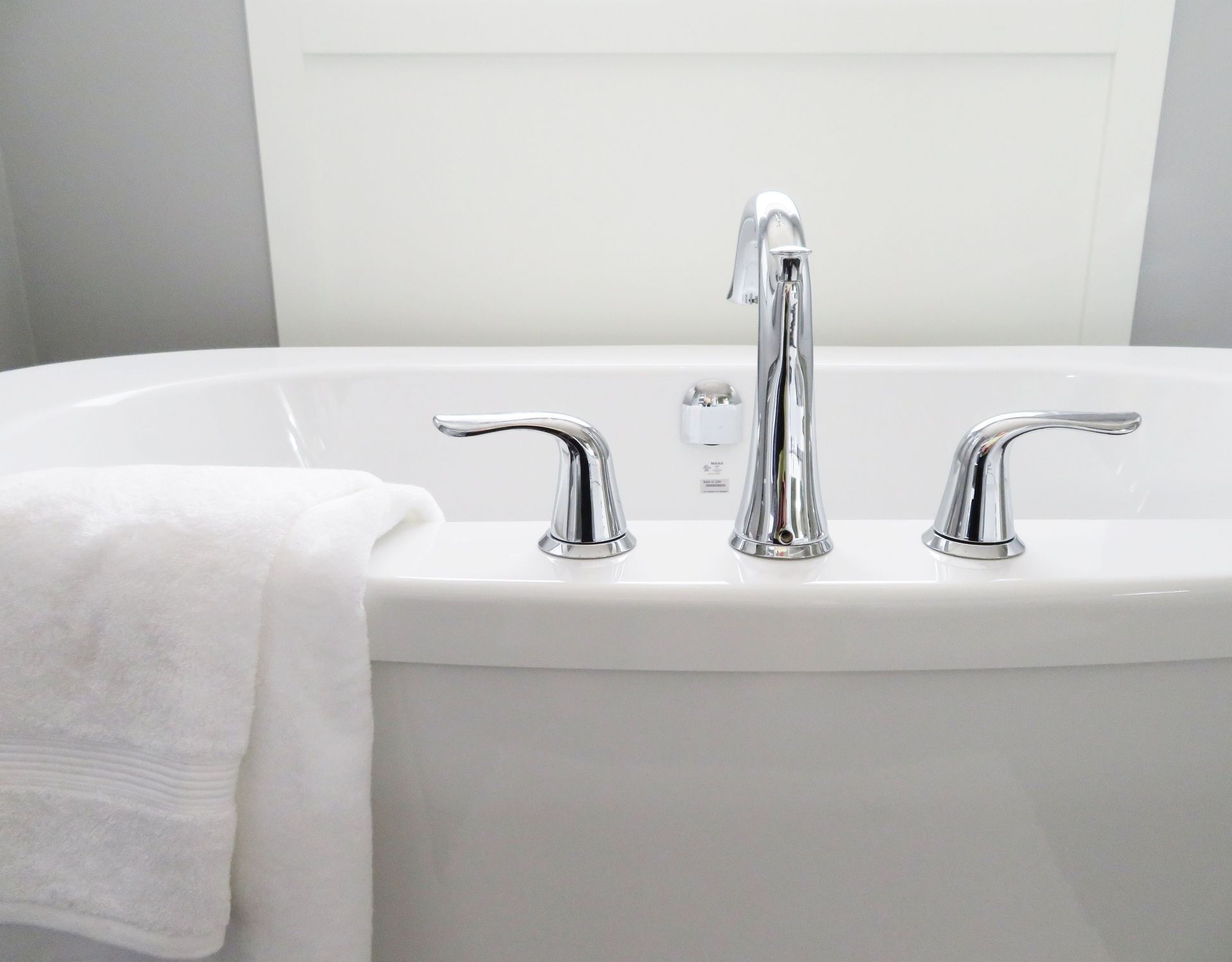
Bathing and toileting supports may include securely installed grab bars, shower seating and compatible toilet aids. Choose them around the person's movement and the available room, including any assistance they receive.
A raised toilet seat must attach securely and provide an appropriate seated position. A bathing seat must fit the enclosure and allow access to the controls. Keep the route clear, address wet surfaces and follow the equipment's installation and use instructions.
These products address particular difficulties; they cannot remove every risk of a fall. Our bathroom safety products guide explores the room and equipment considerations in more detail to help you made an educated purchasing decision.
Kitchen and Mealtime Aids: Look at Grip and Handling
Jar openers, comfort-grip utensils, adapted cutting boards and cups with accessible handles can offer alternatives when gripping or handling ordinary kitchen items is difficult. Consider the specific action: opening a lid, stabilizing food, holding cutlery or lifting a cup.
Check the handle shape, product weight and cleaning instructions. The person should have a say in what feels comfortable and useful. Organizing everyday supplies within easy reach can also reduce unnecessary carrying and reaching.
Bedroom Aids: Consider the Complete Setup
An overbed table can bring reading materials or other everyday items within reach. Check that its base fits around the bed and that its position leaves room to move. It should not be used as a weight-bearing support unless the manufacturer specifically permits that use.
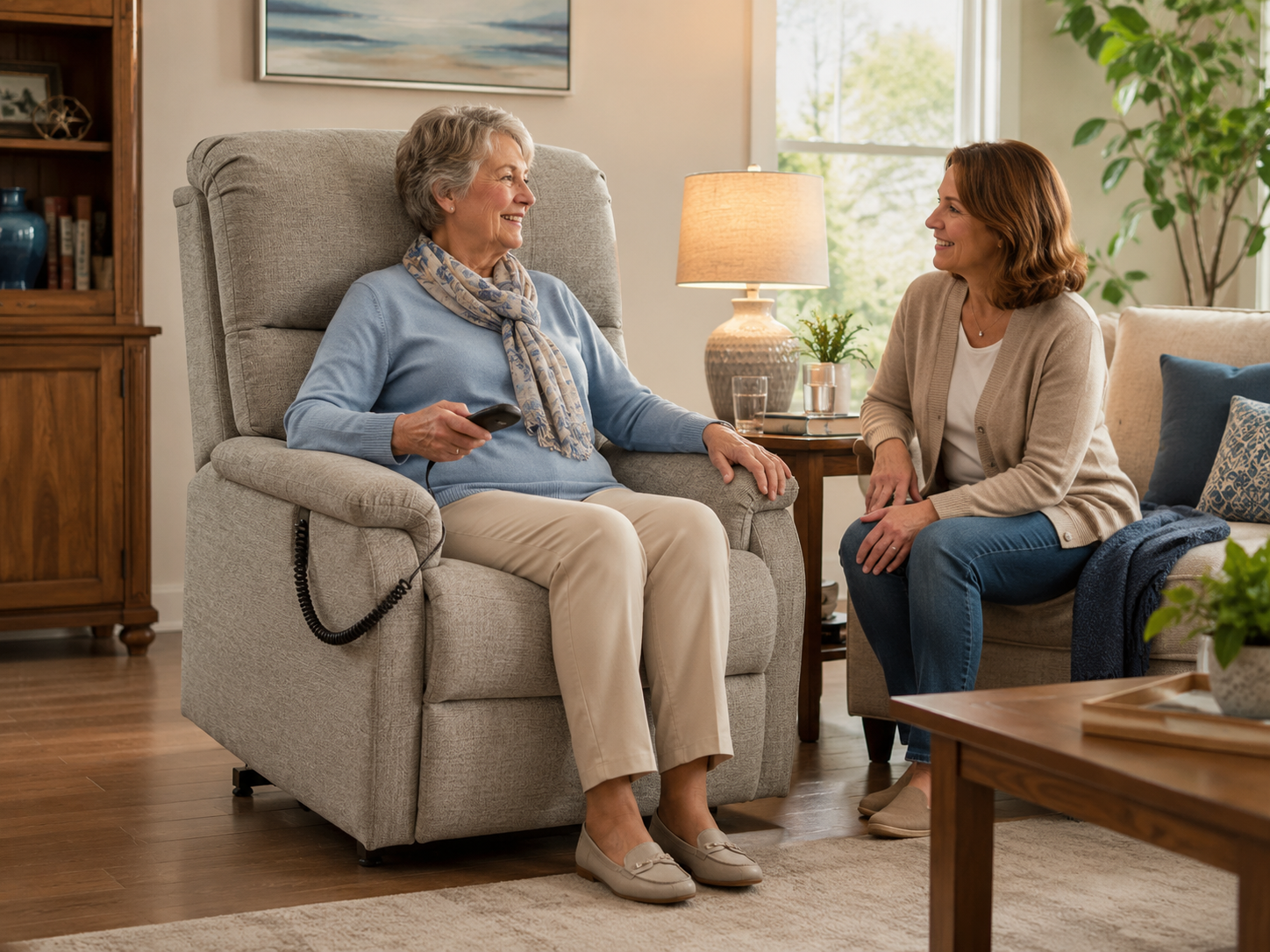
Bedside assist handles and rails require particular care. They are not suitable for everyone, and compatibility between the person, bed, mattress and rail matters. Health Canada identifies entrapment hazards associated with bed systems. Ask for advice on suitability and installation before adding a rail or handle.
If the difficulty involves changing position or getting into and out of bed, our adjustable beds for home use guide introduces the main equipment considerations, helping you to feel confident in your purchase.
How to Choose a Useful Daily Living Aid
Start with one difficult activity and consider:
- The movement: Does the task involve bending, reaching, gripping, balancing or standing?
- The user's preferences: Can they operate the tool comfortably, and do they want to use it?
- The fit: Are the dimensions, attachment method and any weight limit appropriate?
- The routine: Will it work with the person's clothing, furniture and available space?
- The upkeep: Can it be cleaned, stored and checked as instructed?
- The duration: Is the need temporary, ongoing or likely to change?
Ask whether a demonstration or trial is available. Follow the instructions and make sure anyone assisting understands the product too. When balance, transfers or recovery restrictions are involved, an occupational therapist or another appropriate healthcare professional can help assess the task.
Explore Daily Living Aids With UHP
Bring a description of the difficult activity, relevant measurements and any recommendations from your healthcare team. This gives the equipment discussion a practical starting point.
Explore UHP's daily living aids, or contact us to discuss options.