Choosing a mobility scooter can feel exciting, but it can also bring up a lot of questions. One of the most common is whether a 3-wheel or 4-wheel scooter is the better choice.
At first glance, the difference may seem simple. One has three wheels, the other has four. In everyday use, however, that difference can affect how the scooter turns, where it feels most comfortable, how stable it feels outdoors, and how well it fits into a person’s routine.
For Windsor-Essex and Chatham-Kent residents, comparing three-wheel and four-wheel mobility scooters starts with turning space, seating and the conditions where the scooter will be used. Wheel configuration matters, but the specifications and fit of the individual model should guide the decision.
Understanding the Main Difference
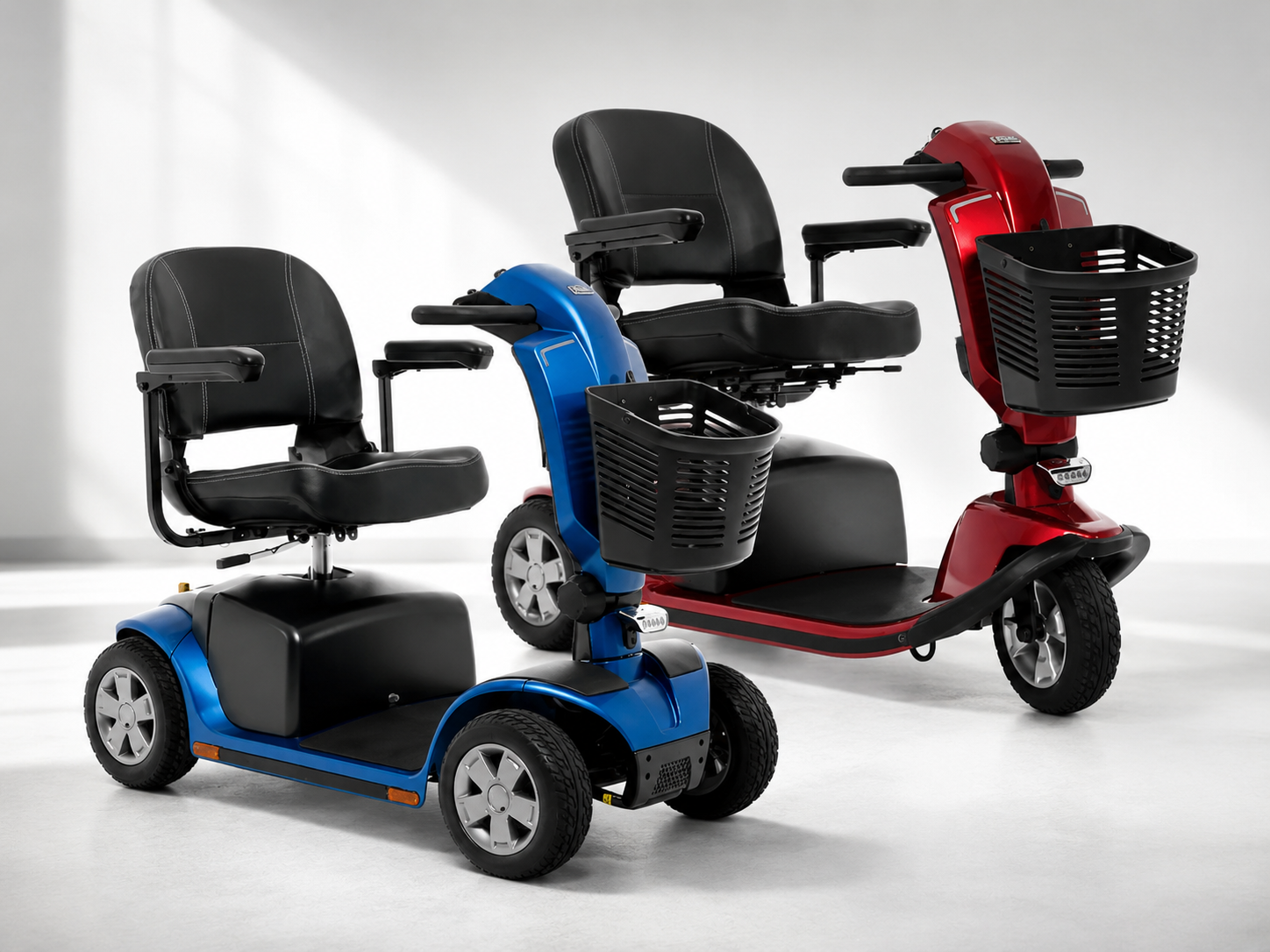
A three-wheel mobility scooter typically has one front wheel and two rear wheels. This layout often allows tighter turning and may provide more open space around the user’s feet and knees.
A four-wheel scooter typically has two front wheels and two rear wheels. Support at both front corners can provide greater lateral stability than a comparable three-wheel design, although handling also depends on the scooter’s dimensions, seating configuration, speed and operating conditions.
These are general design differences. Compare the published specifications for the exact models you are considering rather than deciding by wheel count alone.
When a 3-Wheel Scooter May Be a Good Fit
A 3-wheel scooter is often chosen by users who want easier turning in tighter areas. Because the front end is usually more compact, it can be helpful in places where space is limited.
This may include:
- Apartments or condos
- Narrow hallways
- Smaller stores
- Indoor shopping areas
- Medical offices
- Elevators or tighter entryways
These are situations where a tighter-turning model may be useful, rather than proof that a particular scooter will fit. Check its overall width, length and turning radius against the space available. Some three-wheel models also provide additional foot or knee room, but this should be checked while seated. Outdoor use depends on the model’s intended operating conditions. Review the manufacturer’s surface and incline limits, and discuss any concerns about balance, posture or steering with the provider and an appropriate healthcare professional.
When a 4-Wheel Scooter May Be a Better Choice
A four-wheel scooter may be worth comparing when stability is a priority. Its front-wheel arrangement can provide a different sense of support, particularly when compared with a similar three-wheel model.
For outdoor use, compare more than the wheel layout:
- Tyre size and type.
- Ground clearance and suspension.
- Manufacturer-approved surfaces and incline limits.
- Seating fit and the user’s ability to operate the controls.
Four wheels do not make every scooter suitable for rough ground, slippery conditions or every driveway slope. For Windsor-area outings, discuss the actual surfaces and transitions you expect to encounter. Turning space also varies between models. Some four-wheel scooters use steering systems designed for tighter turns, so check their published turning radius before ruling them out for smaller spaces.
Compare Turning Space and Outdoor Conditions
Compare both designs against the same everyday requirements:
- Turning space: Check the approach to a doorway and the room needed to change direction, alongside the scooter’s published turning radius.
- Foot and knee room: Confirm that the user can sit comfortably without the front housing or tiller restricting their position.
- Outdoor conditions: Check whether the intended surfaces and slopes fall within the model’s operating limits.
- Mixed use: Consider the most restrictive parts of the routine, rather than choosing solely because most outings are indoors or outdoors.
UHP’s mobility scooter options provide a starting point for comparing individual models.
Comfort and Confidence Matter
Comfort and control should be assessed on both wheel configurations. Check how the seat, tiller and foot space work together for the person using the scooter, rather than assuming that either design will provide a better fit.
When comparing scooters, pay attention to:
- How easy it is to get on and off
- Whether the seat feels supportive
- Whether the user can reach the controls comfortably
- How confident the user feels while turning
- Whether there is enough legroom
- How the scooter feels when stopping and starting
- Whether it fits the user’s daily routine
Confidence matters. A scooter that technically fits a space may still not feel right if the user feels unsure while driving it. Likewise, a larger scooter may offer comfort but create challenges with storage or transportation.
Portability and Transportation
Transportation is another key factor. Some 3-wheel and 4-wheel scooters are designed to disassemble for vehicle transport. Others are larger and may require a ramp, lift, or accessible vehicle. The number of wheels does not automatically determine portability, but it can affect the scooter’s size, turning ability, and frame design.
Can it fit into the vehicle? Can the user or caregiver lift the heaviest piece? Will it be stored inside the home? These questions may seem simple, but they can make your final decision much clearer.
Why Trying Both Styles Helps
A mobility scooter is something a person may use regularly, so comfort and control should not be guessed. Trying both 3-wheel and 4-wheel options can help users feel the difference in turning, seating, steering, and stability. Someone may expect to prefer a compact 3-wheel scooter but feel more confident on a 4-wheel model. Another person may assume they need four wheels but discover that a 3-wheel scooter fits their home and daily routine much better.
There is no universal answer because mobility equipment should always reflect the person, not just the product category. Working with a local medical equipment provider can make it easier to compare models in person.
If you are also deciding between portable, full-size and heavy-duty options, our guide to choosing a mobility scooter explains those broader categories.
Find the Scooter That Fits Your Life
Compare three-wheel and four-wheel scooters by how the specific models turn, support your seating position and meet the requirements of your usual environments. The right choice should account for both the user’s needs and the manufacturer’s operating limits.
Universal Health Products helps residents of Windsor-Essex and Chatham-Kent explore mobility equipment options. Contact UHP to discuss your questions today.